About Azolla & Sustainable Cultivation
Azolla is a free-floating aquatic fern capable of producing high-protein livestock feed with minimal water and zero chemical fertilizer. Learn how it works and how to grow it on your farm.
The Power of Nitrogen-Fixing Symbiosis
Azolla lives in a mutualistic symbiosis with the blue-green cyanobacterium Anabaena azollae, which resides in specialized cavities within the fern’s dorsal leaf lobes. This cyanobacterium captures atmospheric nitrogen gas (N₂) and converts it into bioavailable organic nitrogen for the plant.
Because of this unique biological mechanism, Azolla does not require expensive synthetic nitrogen fertilizers like urea or CAN. With only clean water, a thin bed of fertile soil, a slurry of decomposed livestock manure, and small amounts of phosphorus, Azolla rapidly doubles its biomass every 3 to 7 days.
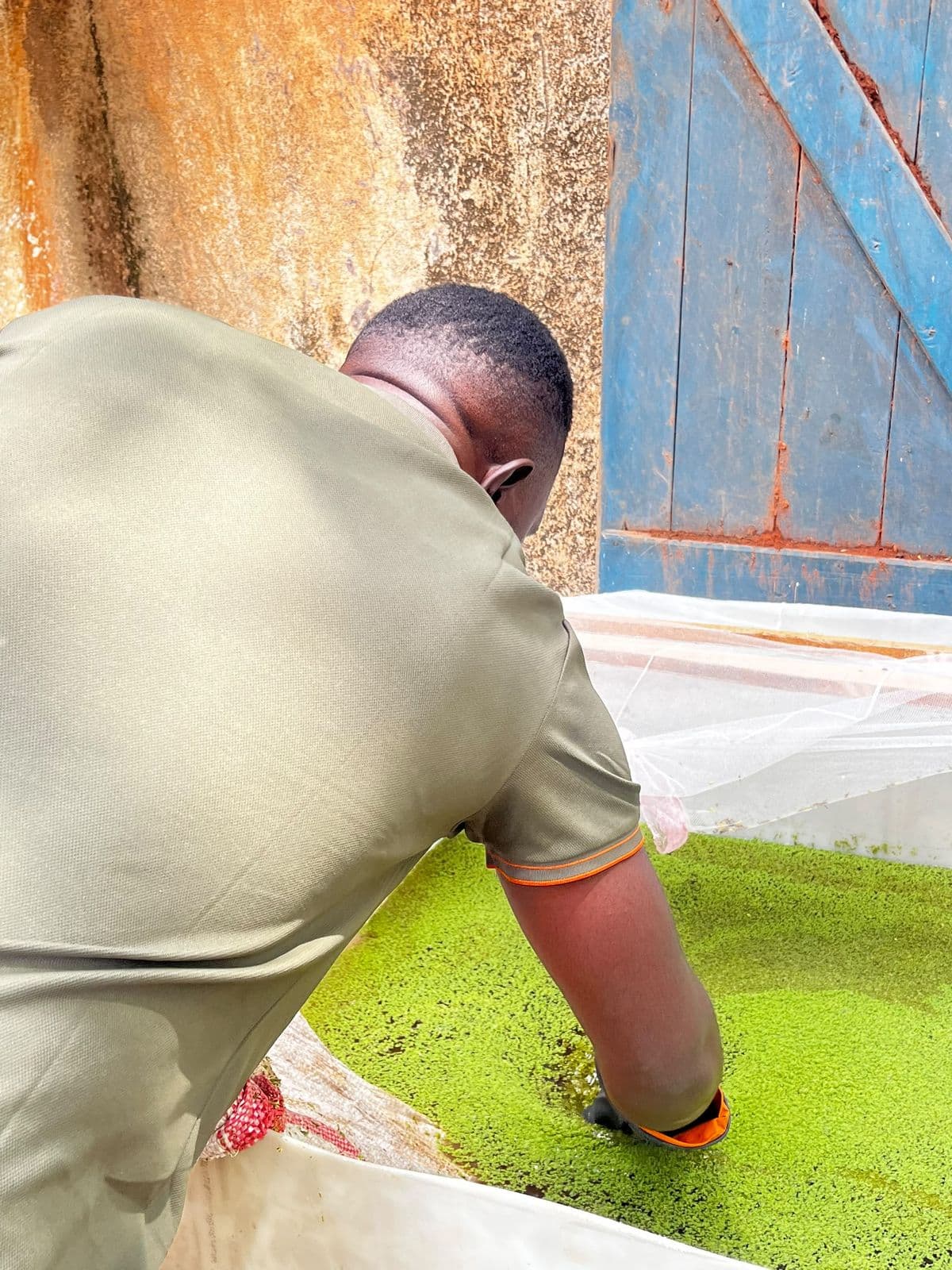
Under typical Ugandan tropical climatic conditions (20°C – 30°C with 30–50% filtered sunlight), a well-maintained 3m × 2m pond yields between 1.0 and 2.0 kilograms of fresh, nutrient-packed biomass every single day for over a year before requiring substrate renewal.
Nutritional Composition vs. Traditional Feeds
How Azolla stacks up against traditional fodder and expensive commercial ingredients.
High Biological Protein Value
Contains all essential amino acids for monogastrics and ruminants, particularly lysine (vital for poultry egg size and pork muscle accretion) and methionine.
Minerals & Carotenoids
Packed with Calcium (1.0–1.6%), Phosphorus, Potassium, Magnesium, and beta-carotene (Vitamin A precursor), creating vibrant golden egg yolks without synthetic colorants.
Low Fiber & High Digestibility
Low in lignin (unlike tough grass hay or Napier grass stalks), allowing tender fronds to be rapidly digested and converted into meat, milk, and eggs.
Three Practical Ways to Cultivate Azolla
Whether you have a small backyard in a peri-urban center or a 5-acre rural farm, there is a production system suited for you.
1. Basin & Small Trough Systems
Ideal for backyard poultry, rabbits, and homesteads with minimal space. Shallow plastic basins or containers (15–20 cm water depth) placed under light tree shade produce daily fresh green feed for 10 to 50 birds.
2. Raised Wooden & Sheet Beds
Constructed with timber frames or bricks lined with UV-resistant polythene. Perfect for areas with rocky ground or poor drainage, keeping water clean and harvesting at waist height for ease of handling.
3. Silpaulin-Lined Earthen Ponds
The gold standard for commercial pig, dairy, and large poultry farms. Ponds measuring 2m x 3m (or larger) dug 25–30 cm deep and lined with 250+ GSM UV-treated silpaulin sheet produce 1.5 to 2.5 kg of fresh harvest every day.
Setting Up a 3m × 2m Earthen Silpaulin Pond
Follow this standard protocol taught in Azofarm Ug practical farmer workshops.
Site Selection & Partial Shade
Select a level site near a reliable water source. Direct midday scorching sun will overheat water and cause fronds to turn reddish-brown. Erect a simple 30–50% agro-shade net or utilize light tree canopy.
Pond Excavation & Silpaulin Lining
Excavate a rectangular pit 2m wide, 3m long, and 25 to 30 cm deep. Ensure the floor is level and free of sharp stones or roots. Lay a durable 250+ GSM UV-treated silpaulin sheet smoothly, securing edges with soil berms or bricks.
Soil & Manure Slurry Preparation
Spread 10 to 15 kg of fertile, sieved garden soil across the bottom. Mix 5 to 7 kg of well-rotted cow or goat dung with water into a slurry, add 30g of single superphosphate (or wood ash), and pour over the soil. Fill with clean water to a depth of 10 to 15 cm.
Inoculation with Pure Starter Culture
Allow suspended sediment to settle for 24 hours. Gently inoculate the water surface with 1.0 to 1.5 kg of fresh, clean Azofarm Ug starter mother culture. Within 7 to 10 days, the fern forms a thick, emerald-green mat ready for daily harvesting.
Ready to Establish Your Azolla Unit?
Order fresh starter cultures with delivery across Uganda, or book our field technician team for complete pond construction and on-site staff training.