Protecting Habitats & Wildlife Through Azolla Zero-Grazing
By providing an affordable and accessible on-farm feed alternative, Azolla farming eliminates the economic pressure to graze livestock inside protected national parks, forest reserves, and fragile wetlands.
Why Livestock Encroachment Threatens Uganda’s Natural Heritage
In agrarian communities bordering Uganda’s key biodiversity strongholds—such as Bwindi Impenetrable, Queen Elizabeth, and Budongo Forest reserves—feed scarcity is chronic. During the dry seasons, pasture grass dries up and commercial feed becomes unaffordable.
Farmers are often forced by economic desperation to herd goats, cattle, and sheep into protected forest buffer zones and wetlands. This encroachment causes severe environmental degradation:
- Habitat Trampling & Soil Compaction: Cattle hooves destroy forest undergrowth, seedbeds, and fragile wetland water-retention channels.
- Tree Barking & Regeneration Failure: Goats devour saplings and girdle rare indigenous tree species, preventing natural canopy regeneration.
- Human-Wildlife Conflict: Herders enter core animal habitats, leading to clashes with park rangers and increasing the placement of illegal snares.
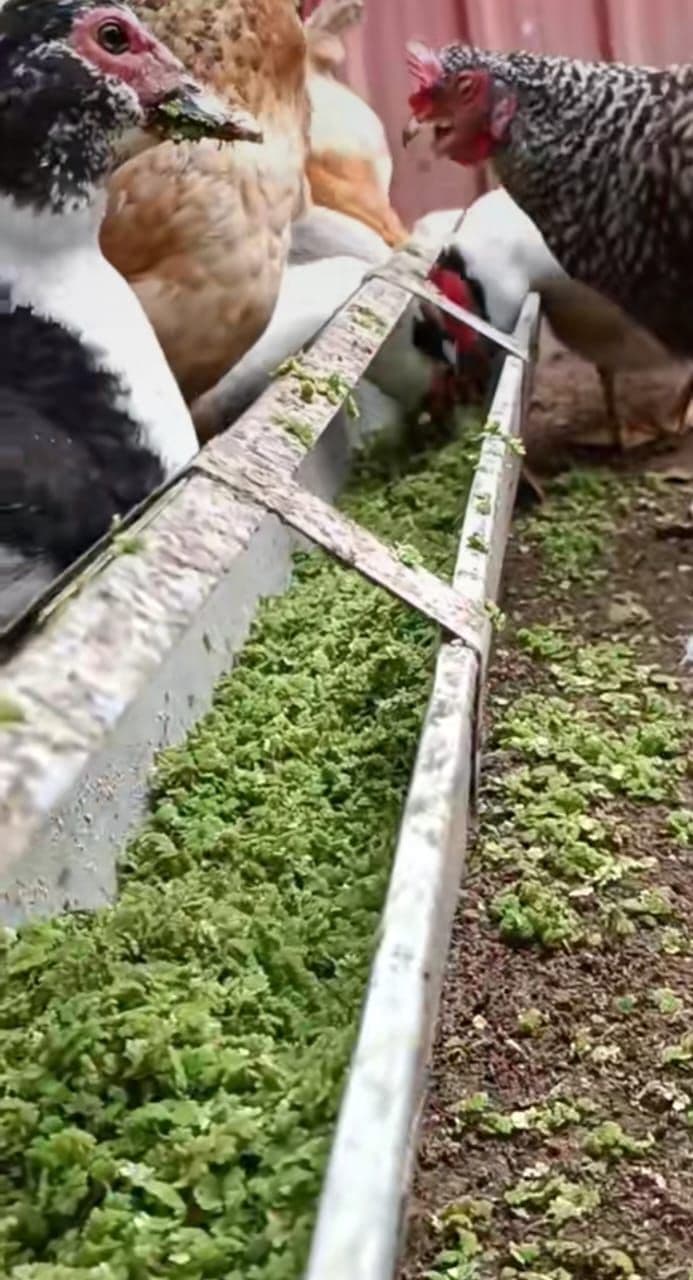
How Azolla Enables 100% Zero-Grazing
When a small 3m × 2m backyard pond supplies up to 2 kg of fresh protein daily throughout all dry months, farmers have zero reason to trespass into national parks.
Zero Forest Trespass
Animals are nourished inside clean, confined zero-grazing pens with fresh Azolla, crop residues, and water. Protected forests retain their canopy and indigenous saplings without livestock grazing pressure.
Stopping Pathogen Transmission
Confining animals eliminates direct and indirect contact between domestic stock and wild animals (such as mountain gorillas, baboons, and antelopes). This halts cross-species transmission of helminths, mange mites, and zoonotic respiratory bacteria.
Soil & Water Regeneration
Pond water effluent, saturated with nitrogen-fixing cyanobacteria and beneficial minerals, is recycled onto kitchen gardens and banana plantations. It revitalizes depleted soils without synthetic agrochemicals leaching into river systems.
A Message from Lead Veterinarian Dr. Steven Kizza
“In veterinary epidemiology, we understand that animal health, human livelihood, and wildlife conservation are inseparable components of One Health. When community goats and cattle roam wild forest corridors in search of dry-season forage, they pick up parasite cysts and tick vectors, and shed pathogens that endanger sensitive wildlife like mountain gorillas and chimpanzees.”
“Azolla offers the most practical, low-cost solution we have ever introduced. It gives a resource-constrained household the ability to produce superior protein in 2 square meters of water right behind their kitchen. By keeping livestock healthy, well-fed, and confined in zero-grazing stalls, we protect both the farmer’s economic livelihood and Uganda’s irreplaceable natural heritage.”
Partner with Azofarm Ug on Conservation Programs
We collaborate with conservation NGOs, park authorities, community cooperatives, and environmental donors to establish community Azolla buffer zones around protected areas.